

A pergola changes how you use your outdoor space. On a small patio it carves out a corner for coffee, in a large garden it draws people together, and over a dining set it makes meals more comfortable. Living & Home’s range has options for each setting, from compact arched designs to wide rectangular frames with retractable canopies. Here’s how to pick the right one for your space.
Pergola Picks at a Glance
- Small Patios: Compact, arched pergolas with built-in canopy fabric keep you shaded without taking over.
- Spacious Gardens: Large freestanding models with retractable tops work well as a central feature.
- Outdoor Dining: Rectangular pergolas with side curtains protect tables from both sun and breeze.
Explore the full Living & Home pergola collection and match your space with the right frame and canopy.
Best Pergolas for Small Patios
Tight spaces benefit from vertical design. An arched metal pergola draws the eye upward and makes the area feel taller. The fitted canopy blocks glare without adding bulky attachments.
- Why it works: Slim frames maximise floor space.
- Tip: Neutral canopies in cream or grey blend into brickwork and won’t overwhelm a narrow patio.
- Scene: A bistro table for two beneath the arch — suddenly the patio feels like an outdoor café rather than just a paved strip.
Best Pergolas for Spacious Gardens
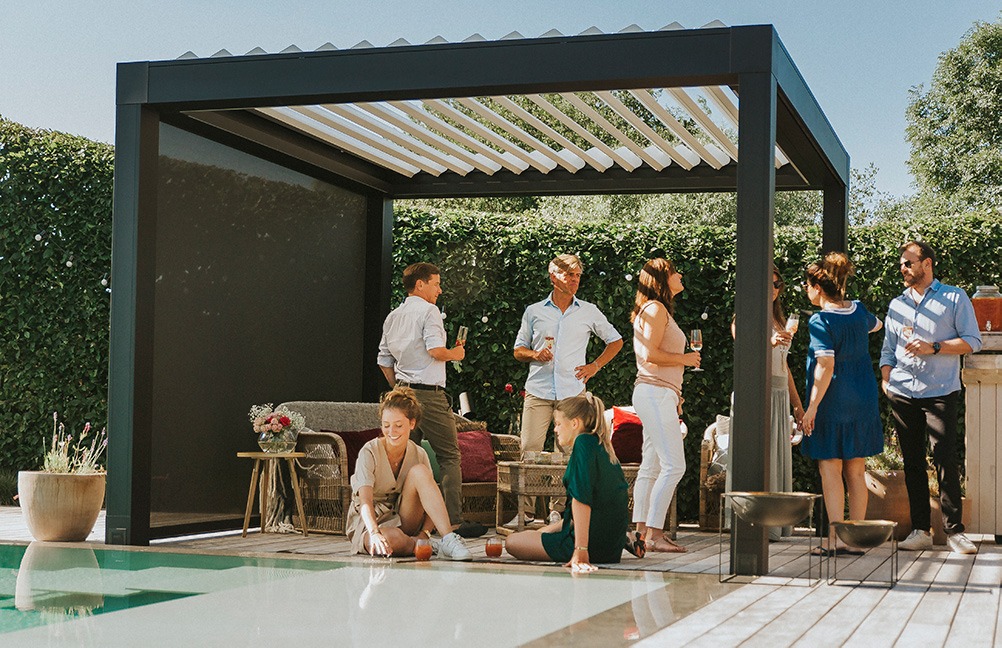
With more room, you can go for breadth as well as height. A wide rectangular pergola anchors a seating zone and naturally becomes the point people gravitate to.
- Why it works: Retractable canopies let you choose between open sky and shade.
- Tip: Place sofas or loungers under the frame so it feels like a defined “outdoor living room.”
- Scene: Friends stretched out on corner seating, canopy half-drawn, evening light filtering through — the structure shapes the garden into a destination.
Best Pergolas for Outdoor Dining Areas
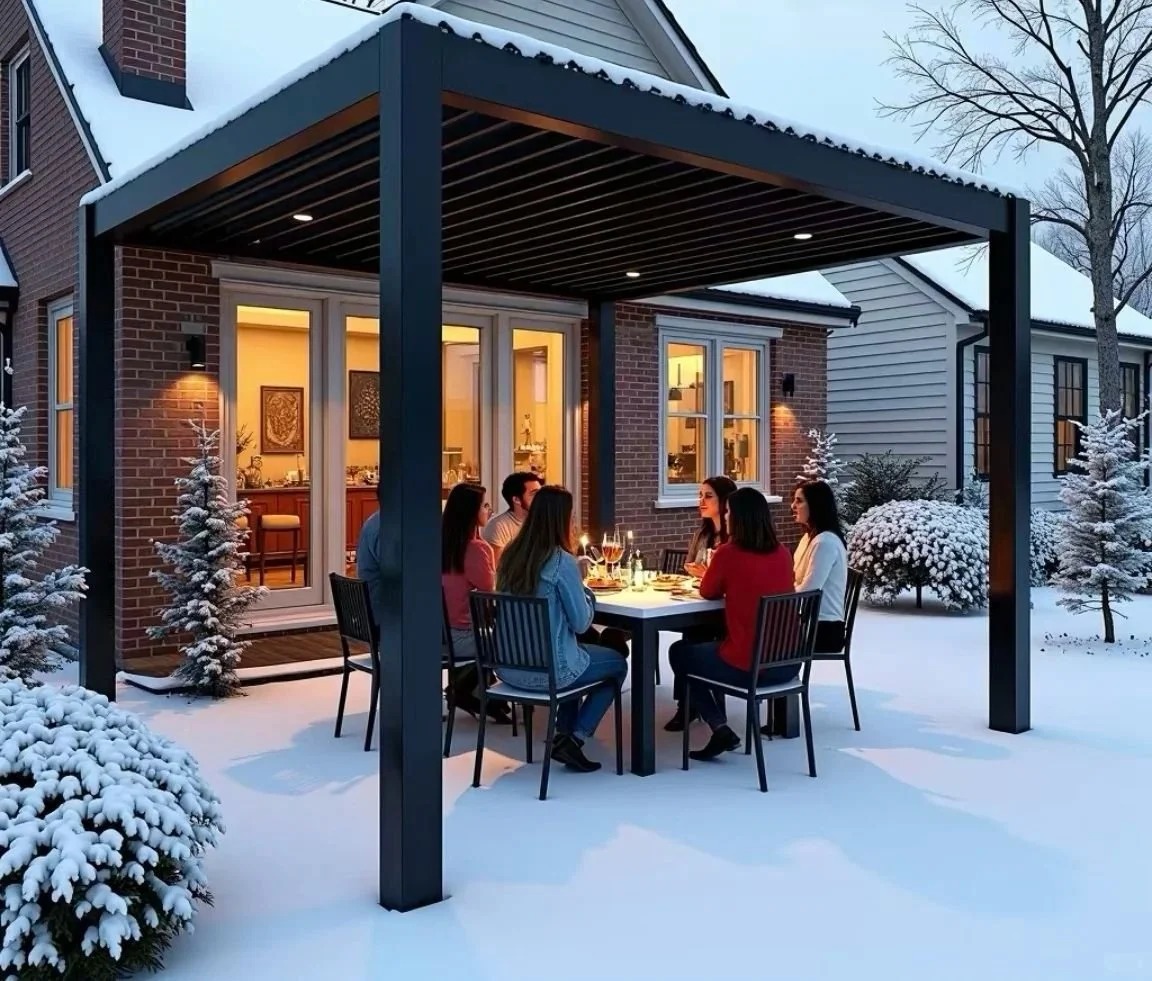
Meals outside can be uncomfortable when the sun is low or the air turns cool. A rectangular pergola solves this by covering the whole table span and, with curtains or side panels, cutting wind from the edges.
- Why it works: Its shape lines up with standard dining sets, giving full coverage without awkward gaps.
- Tip: Darker frames paired with string lighting set the stage for evening dinners.
- Scene: A long table under the canopy, lanterns strung across, the pergola framing the dinner like walls in a room.
How to Style a Pergola for Everyday Living
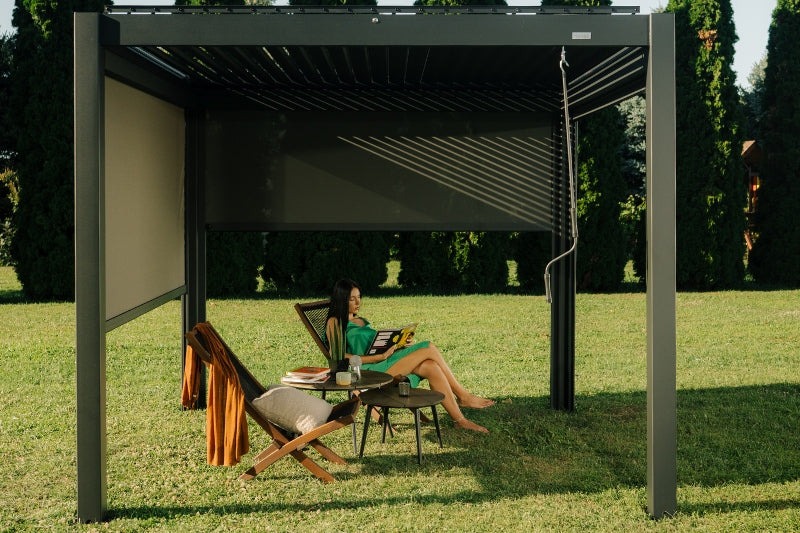
A pergola is more than a frame and canopy, it becomes part of how you live outside. The details you add will decide whether it feels like an occasional shade spot or a true extension of your home.
For small patios, keep furniture light and moveable. Folding bistro chairs and a compact table mean you can adapt the space easily. Hanging planters from the pergola frame give greenery without taking up floor area.
In bigger gardens, think about creating zones. Place an outdoor sofa set under the pergola and layer in rugs or lanterns. The structure works like walls in a room, anchoring the seating area so it doesn’t feel lost in open space.
Over dining tables, don’t be afraid to dress the pergola itself. String lights across the top beams, add curtains for a soft edge, or use climbers to weave greenery around the frame. These small touches turn a simple shade cover into an atmosphere, one that invites guests to linger long after the plates are cleared.
The takeaway? A pergola is functional, but with the right styling, it becomes a backdrop for everyday life outdoors.
A Pergola That Defines the Space
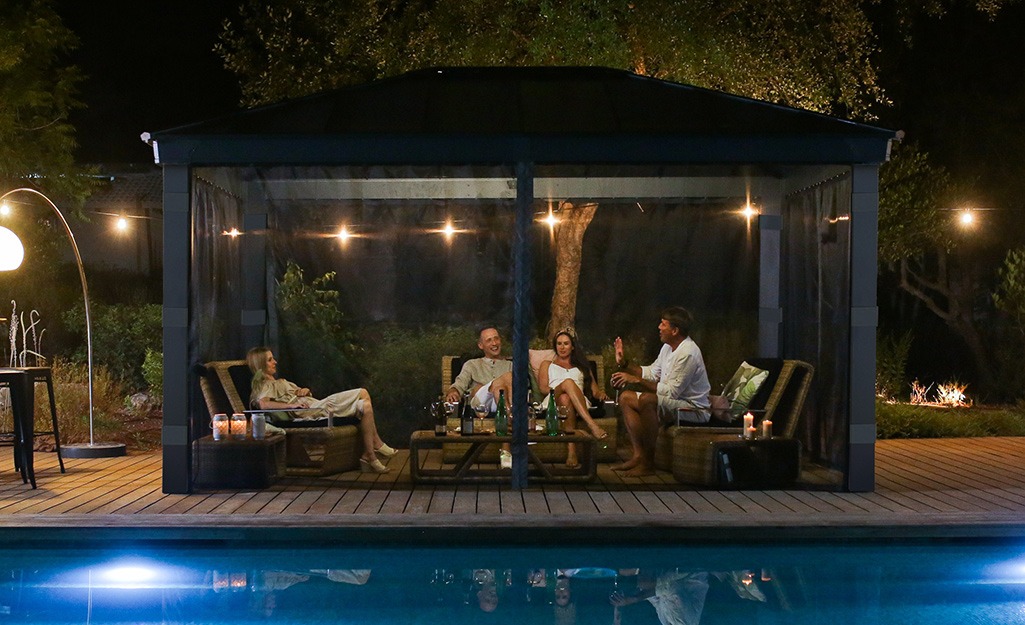
The right pergola doesn’t just sit in a garden, it shapes how you use it. On a compact patio it creates a corner worth lingering in. In a large garden it gives structure and purpose. Over a dining table it turns a quick meal into an occasion.
Living & Home’s collection balances form and function. With the right frame and canopy, you can make even a modest patch of paving feel like an extension of your home. Once it’s in place, you’ll notice you spend more time outside — and that’s the whole point.
FAQs
1. Do pergolas block the sun completely?
Not always. Fixed fabric tops give steady shade, while open frames let in filtered light unless you add a canopy or train plants to climb.
2. Can they be used through winter?
Yes, especially models with weather-resistant canopies. Adding curtains helps with wind in colder months.
3. How tricky is the build?
Most arrive flat-packed. Two people can usually assemble one in an afternoon with the included tools.
4. Do they need fixing to the ground?
Yes. Small pergolas often use stakes, while larger ones are best bolted to paving or weighted down.
5. Can I style them with plants?
Absolutely. Wisteria, jasmine, or climbing roses grow beautifully across the frame and add natural shade.